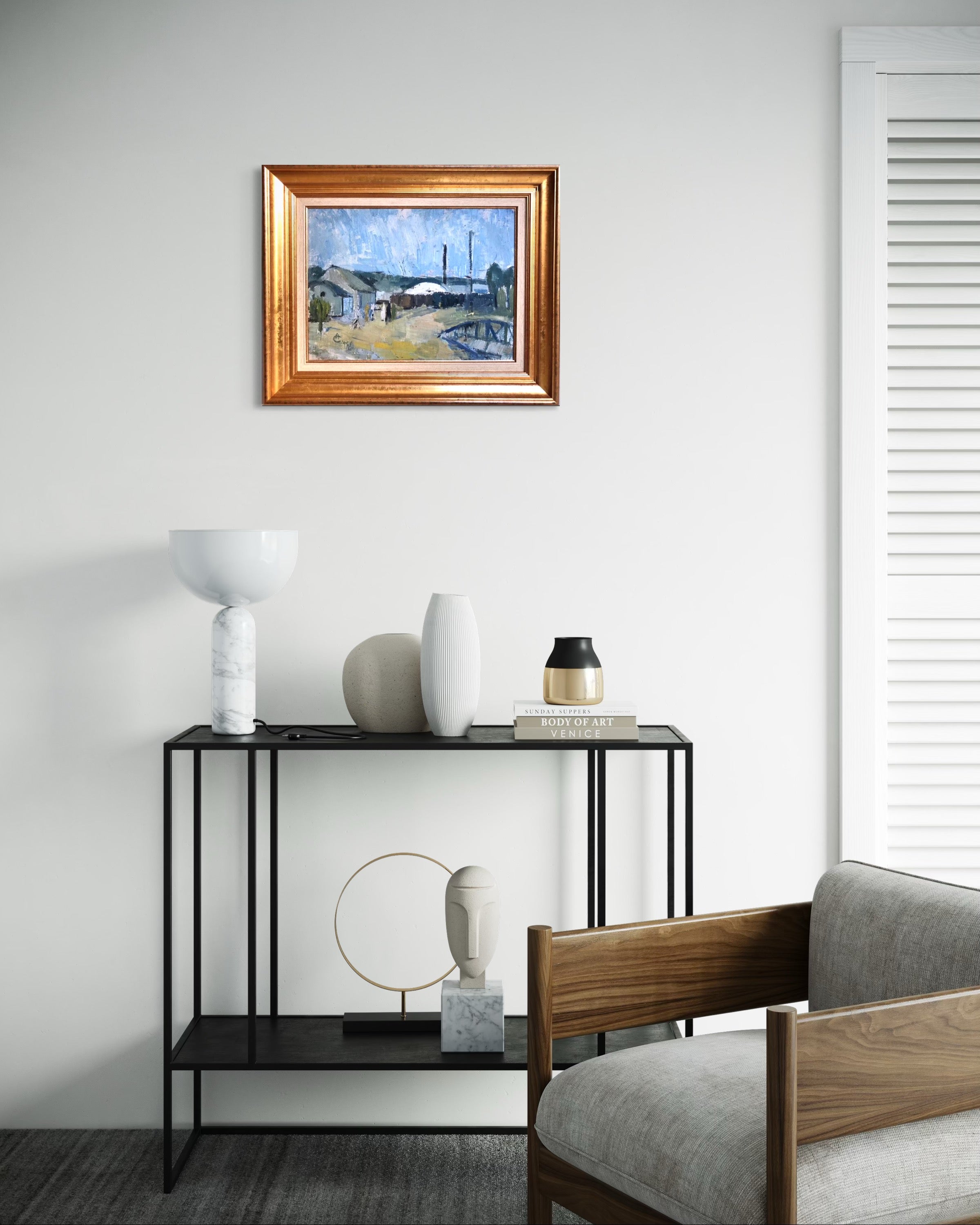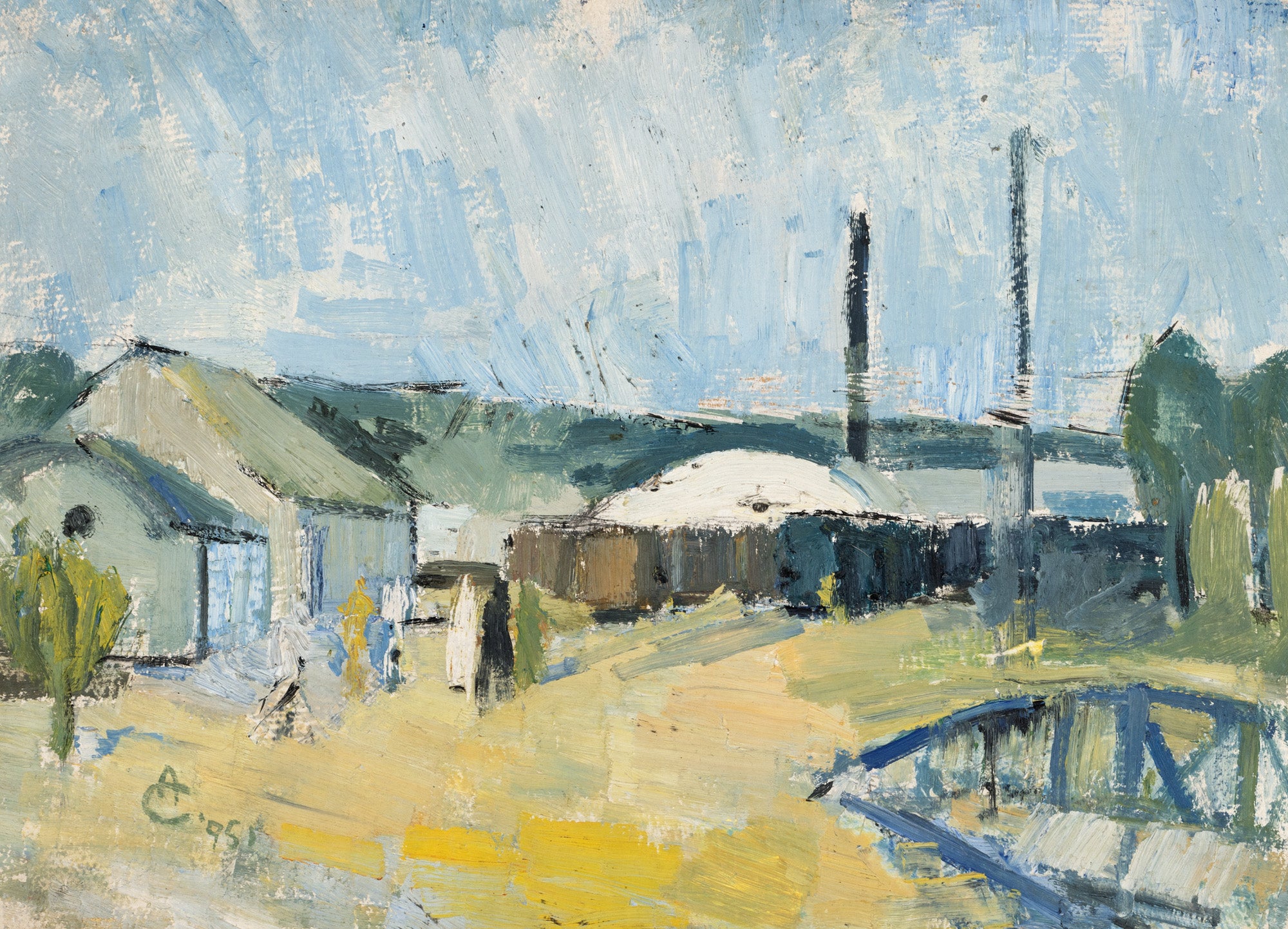
Alexandru Ciucurencu - The road to the factory
Sale price25.000,00 lei


Cart
Your cart is empty
Alexandru Ciucurencu (1903–1977) is considered one of the most important Romanian painters of the 20th century, known for the expressive power of his color and his compositions full of vitality. Trained at the School of Fine Arts in Bucharest under the guidance of Camil Ressu, and then refined in Paris, Ciucurencu managed to combine the Romanian plastic tradition with the influences of Western modernism, especially Post-Impressionism and Fauvism.
His work is distinguished by a vibrant palette, with intense color accents, broad brushstrokes, and a dynamic composition. He primarily painted landscapes, still lifes, interiors, and portraits, developing a unique style, recognizable by the harmony between form and color. Ciucurencu's painting conveys a joy of living, a solar energy, in contrast to the often difficult times in which he created.
In the post-war period, he was a professor at the Institute of Fine Arts in Bucharest, influencing generations of young artists. Even though he had to adapt to the official demands of the communist regime, he maintained his stylistic individuality and plastic refinement.
Today, his works can be found in important collections and museums in Romania and abroad. Alexandru Ciucurencu remains an emblematic figure of modern Romanian art, celebrated for the lyricism of his color and the expressive power of his painting.
Sort by
1 product