
Ion Theodorescu-Sion
Ion Theodorescu-Sion (1882–1939) is one of the central figures of Romanian modernity, the author of a personal synthesis between the language of European avant-gardes and the specific character of local tradition. Trained at the School of Fine Arts in Bucharest and perfected in Paris, Sion went through stylistic stages from symbolism and post-impressionism to a decorative-constructive formula that became emblematic for the 1920s–1930s.
His work highlights motifs of the Romanian village – white houses, barns, orchards, peasants, peasant women in traditional costumes – integrated into compositions with clear planes, firm contours, and concentrated chromaticism. Through the geometrization of forms, the balance of surfaces, and the ornamental rhythm, Sion proposes a "modern classicism" in which monumentality is achieved through simplicity and order.
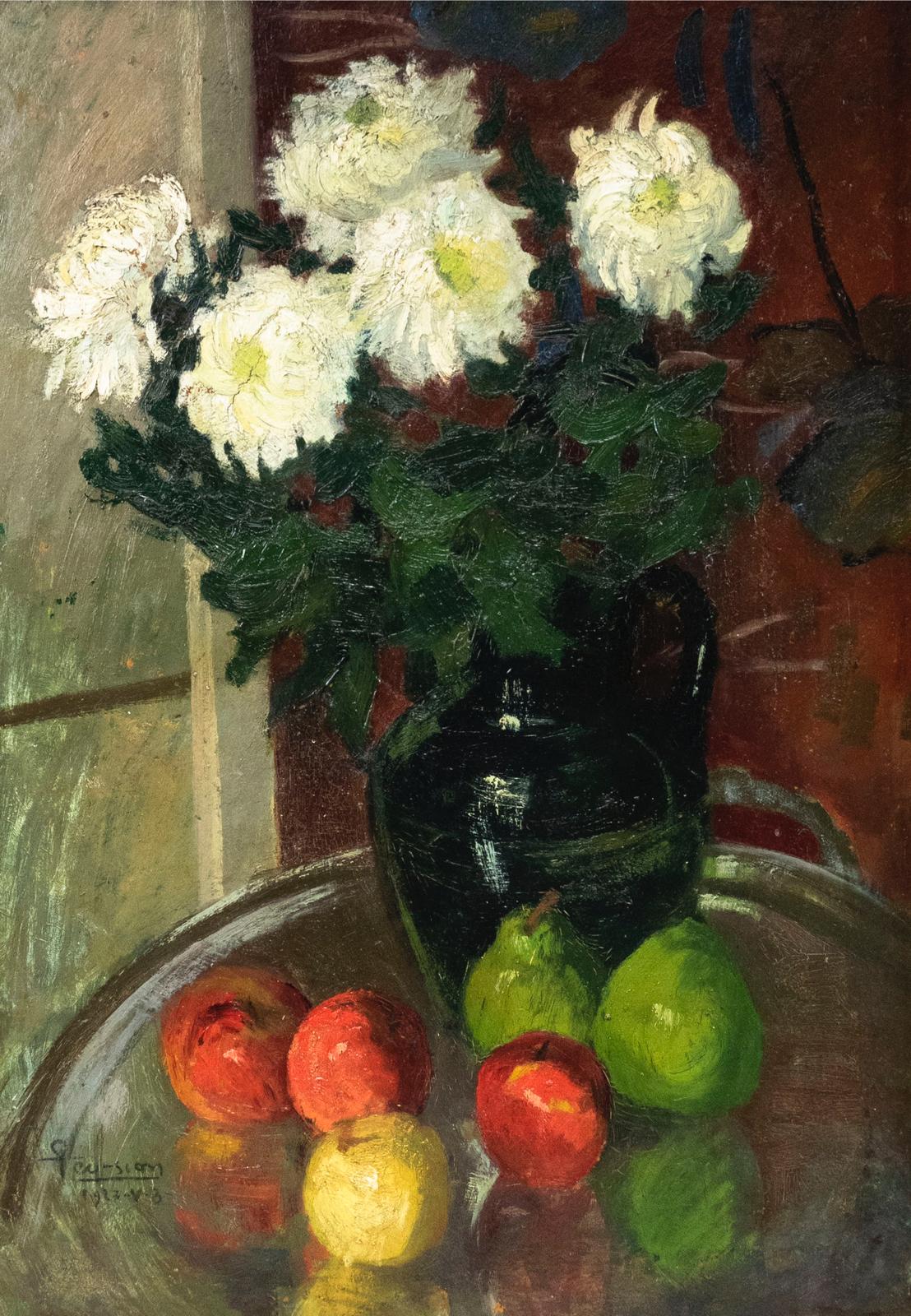
A special chapter consists of his landscapes from Dobrogea and Balchik: white cliffs, walls bathed in light, austere vegetation, domes, and minarets, all arranged in vertical and horizontal structures that give the image a sculptural appearance. In still lifes and interior scenes, fabrics, ceramics, and folk motifs become plastic benchmarks, not simple accessories, reinforcing the idea of modern art with national roots.
Sion was active in Bucharest salons and artistic groups of the era, contributing through exhibitions and texts to defining a modern, sober, and decorative Romanian style. Beyond the formulas of the time, he remains relevant through the clarity of his composition, the rigor of his drawing, and the nobility of his color.
Today, Ion Theodorescu-Sion is regarded as a classic of Romanian modernism: a painter of order and light, who transformed indigenous motifs into memorable pictorial architectures, giving shape to an idea of modernity with identity.
Sort by
1 product