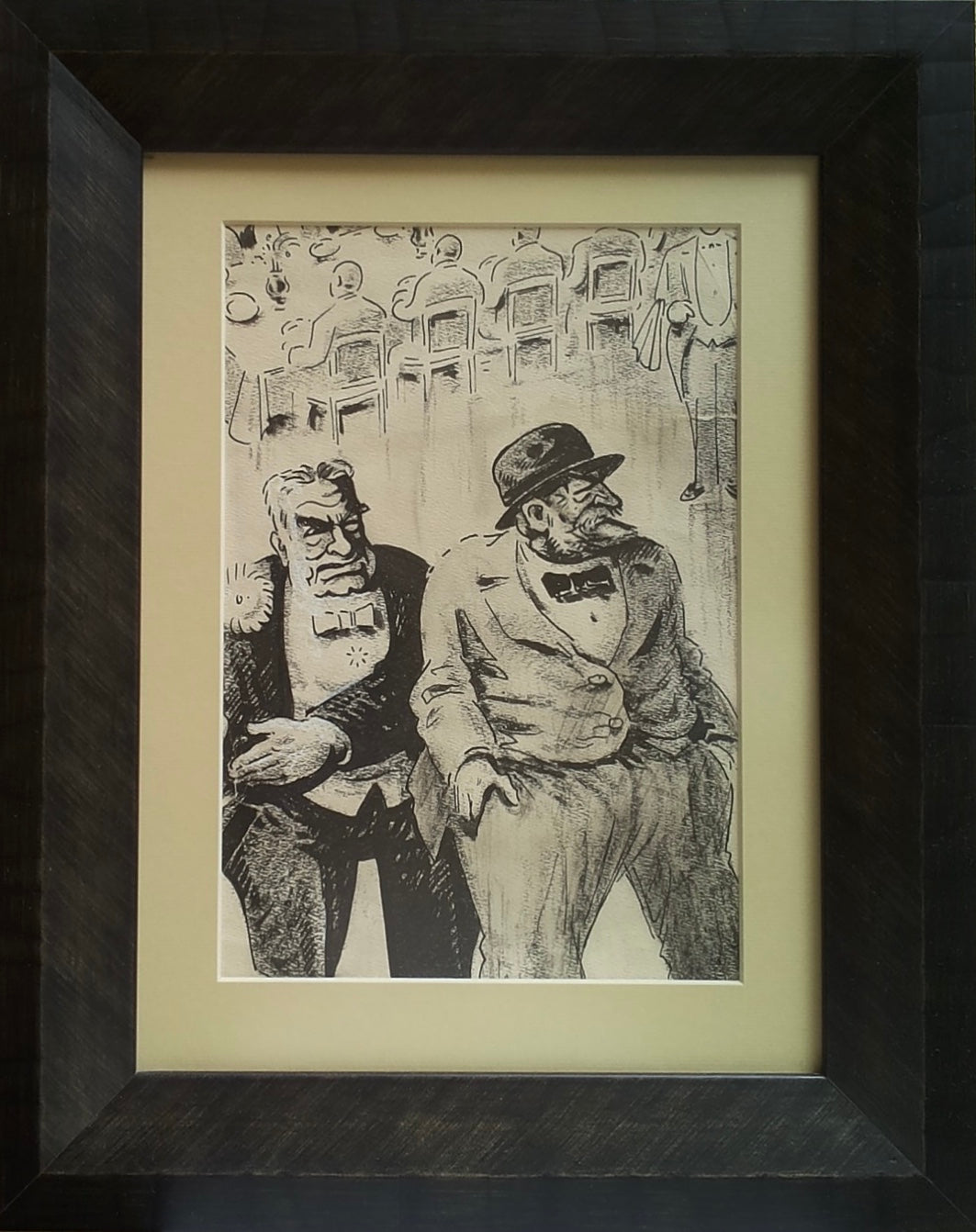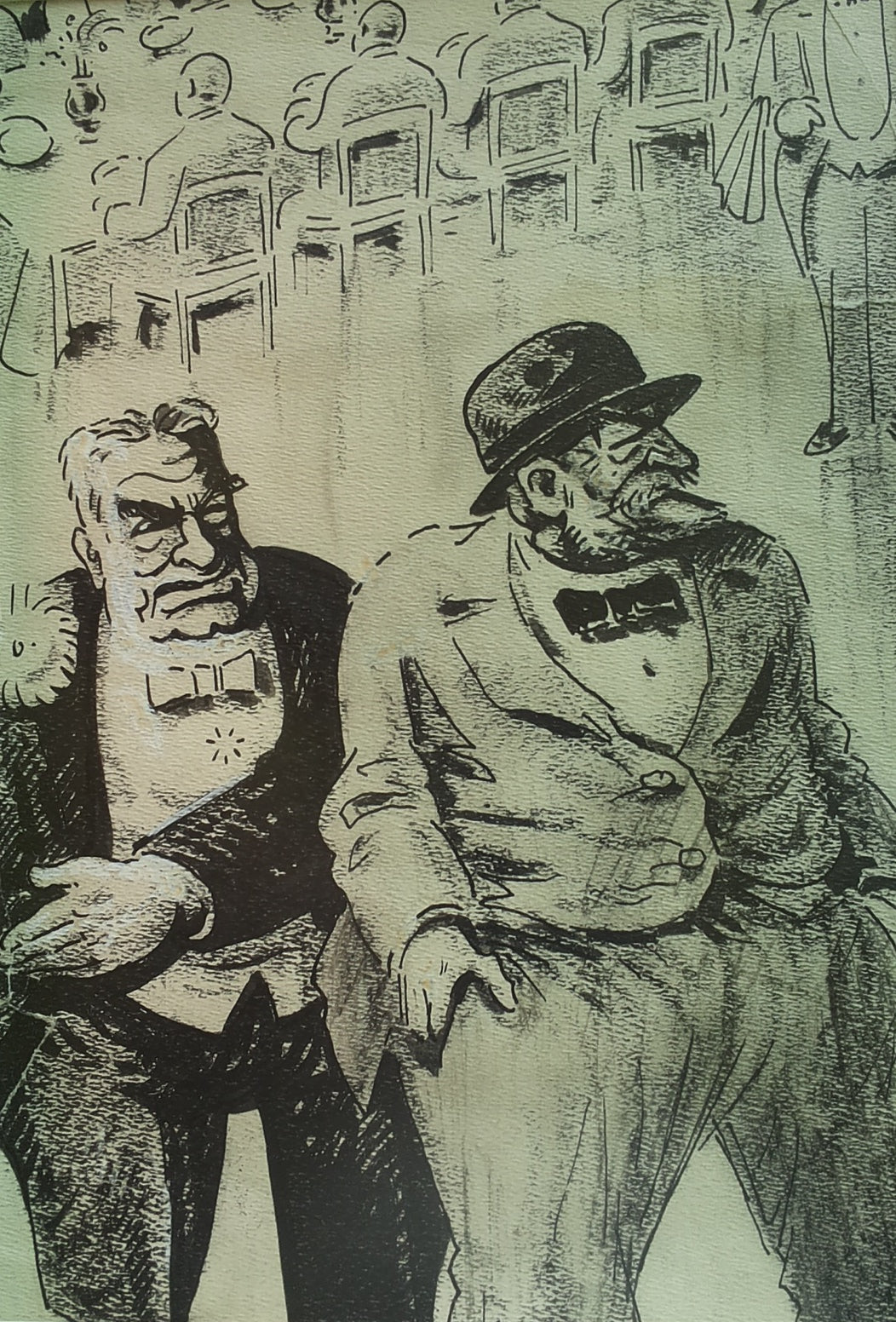
Ion Bărbulescu (B'arg) - Vintila ICBratianu and C-tin Argetoianu
Sale price750,00 lei


Cart
Your cart is empty
Ion Bărbulescu (B'Arg) (1887–1969) was a remarkable Romanian painter and graphic artist, known for his expressive representations of urban and rural life in interwar Romania. Born in Odobești, Bărbulescu was a passionate autodidact who independently studied drawing and color techniques, completing his training with a documentary trip to France.
A prolific artist, B'Arg explored various techniques, including oil, watercolor, charcoal, and especially pastel. Art critic George Oprescu noted the subtlety and brilliance of his pastels, highlighting their ability to combine drawing with color in an intimate and expressive way.
B'Arg's works accurately and sensitively capture scenes from daily life: street vendors, flower sellers, children playing, mothers, coffee shop owners, and intoxicated citizens, rendering the atmosphere of Bucharest's neighborhoods. These images, full of humor and empathy, offer a visual chronicle of Romanian society in the first half of the 20th century.
During World War I, Bărbulescu was mobilized and was part of the Group of Mobilized Artists, collaborating with publications such as "România" and "Arena." Throughout his career, he participated in numerous exhibitions and published drawings in magazines such as "Toamna" and "Dimineața copiilor."
Today, the work of Ion Bărbulescu (B'Arg) is being rediscovered and appreciated for its authenticity and documentary value, offering a valuable artistic perspective on a bygone era.
Sort by
1 product