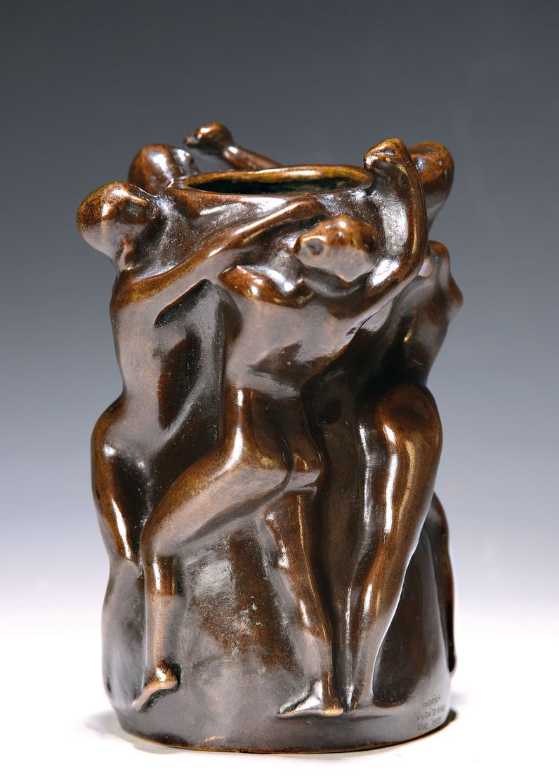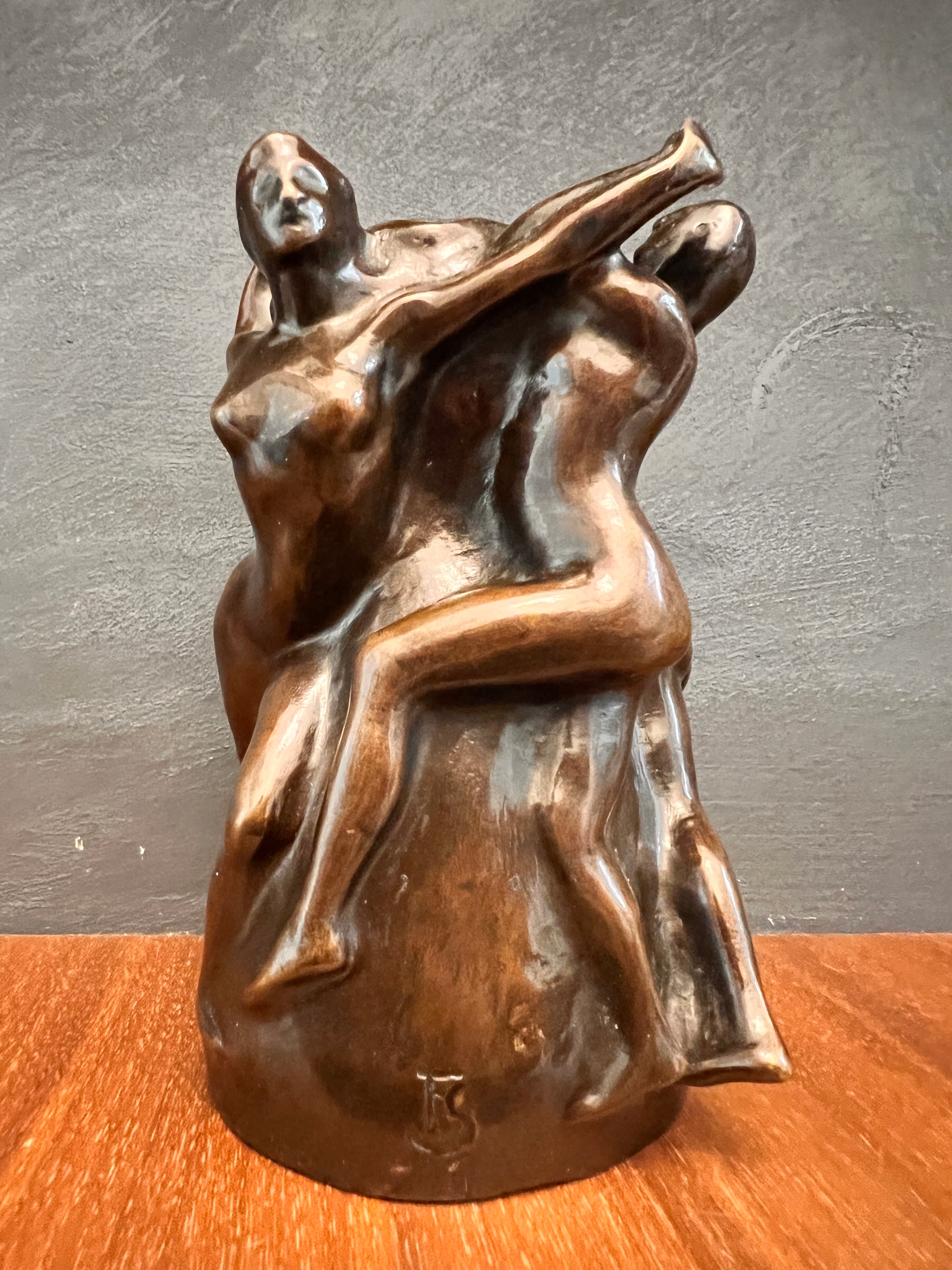

Frederic Storck
Frederic Storck (1872–1942) is one of the key figures in early 20th-century Romanian sculpture, a representative of the famous Storck family, which laid the foundations of modern sculpture in Romania. Trained in the family workshop and perfected through European studies, Storck combined the rigor of academism with a modern decorative sense, close to the spirit of Art Nouveau and the Neo-Romanian trends in architecture and applied arts.
His work covers a wide range: portraits and busts, allegorical compositions, monumental sculpture, and architectural decoration. In his portraits, the artist pursues psychological essence, modeling with calm precision, in bronze or marble, the dignity of the subject. In his monumental and decorative works, he emphasizes the clarity of volumes and the rhythm of silhouettes, integrating sculpture into public space with sobriety and elegance.
Frederic Storck played an active role in Bucharest's artistic life: he exhibited constantly, collaborated on public projects, and contributed to shaping a modern appreciation for quality sculpture. His relationship with the interwar artistic environment – including through dialogue with decorative painting and architecture – consolidated an ideal of art unity, where sculpture is not insular but part of a coherent cultural whole.
The studio-home he shared with the artist Cecilia Cuțescu-Storck today preserves the memory of a remarkable creative community and illustrates how the two conceived art as a lifestyle. Through rigor, measure, and the nobility of his modeling, Frederic Storck remains a classic benchmark of modern Romanian sculpture.
Sort by
1 product