Theodor Pallady (1871–1956) is one of the most important Romanian painters of the 20th century, recognized for the rigor of his drawing, compositional balance, and the intellectual refinement of his work. Born in Iași, Pallady initially studied engineering in Paris, but his passion for art led him to the École des Beaux-Arts, where he was a student of the master Gustave Moreau, alongside Henri Matisse.
His training in the Parisian artistic environment defined his entire career, influencing his sober style, built on clarity, harmony, and meditative depth. Pallady's work includes still lifes, interiors, urban landscapes, and female nudes, all treated with a unique sensibility, where drawing is essential, and color, finely proportioned, becomes an instrument of expression, not exuberance.
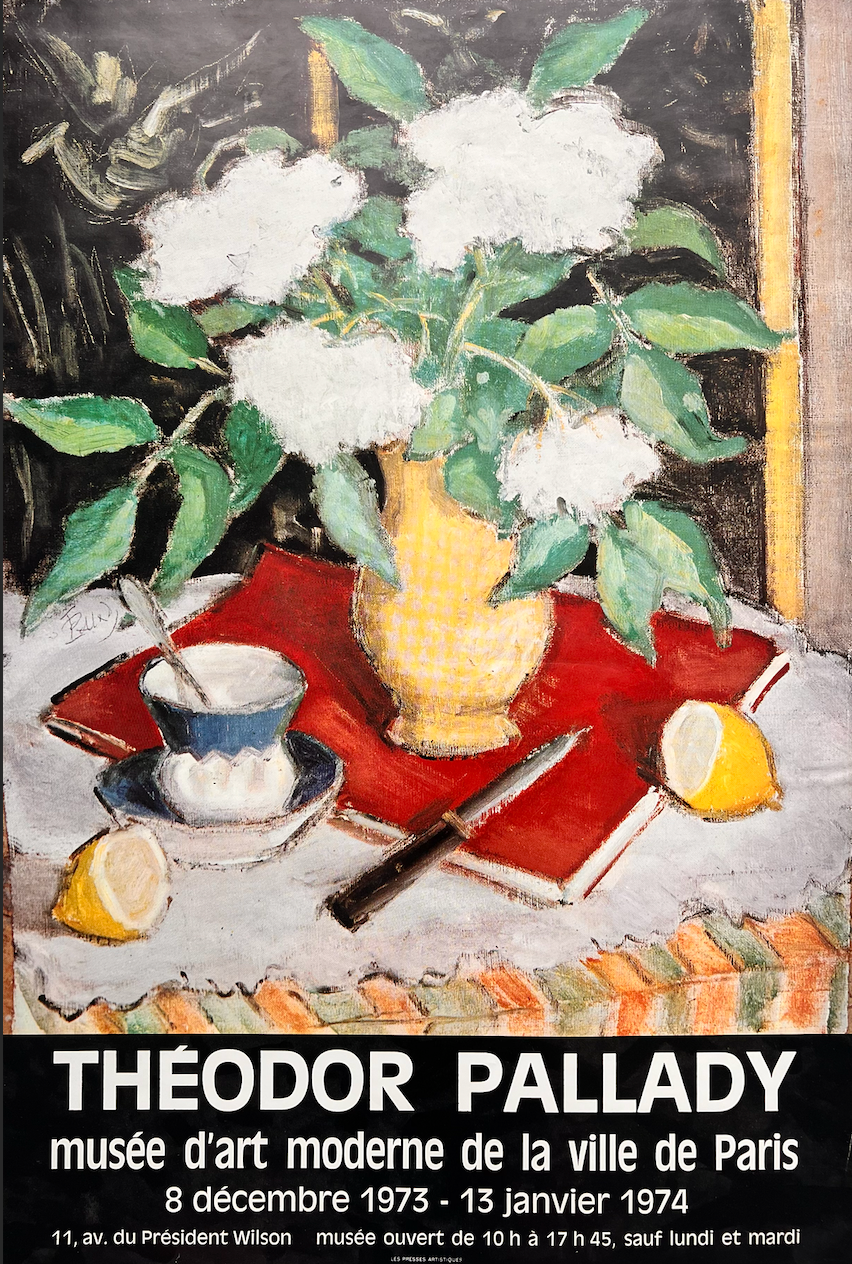
His famous still lifes with flowers, fruits, books, or domestic objects reflect a world of inner balance, a visual meditation on silence and time. In these works, space is reduced to the essential, and each object acquires an almost spiritual presence.
Pallady was a cultured spirit, close to poets and philosophers, and his painting reveals a profound thought on forms and proportions. Through the discretion of expression and the intellectual power of construction, he created refined and lasting art.
Today, Theodor Pallady is considered a classic of Romanian modernity—a painter of balance, tranquility, and plastic intelligence, whose works remain landmarks of early 20th-century European painting.