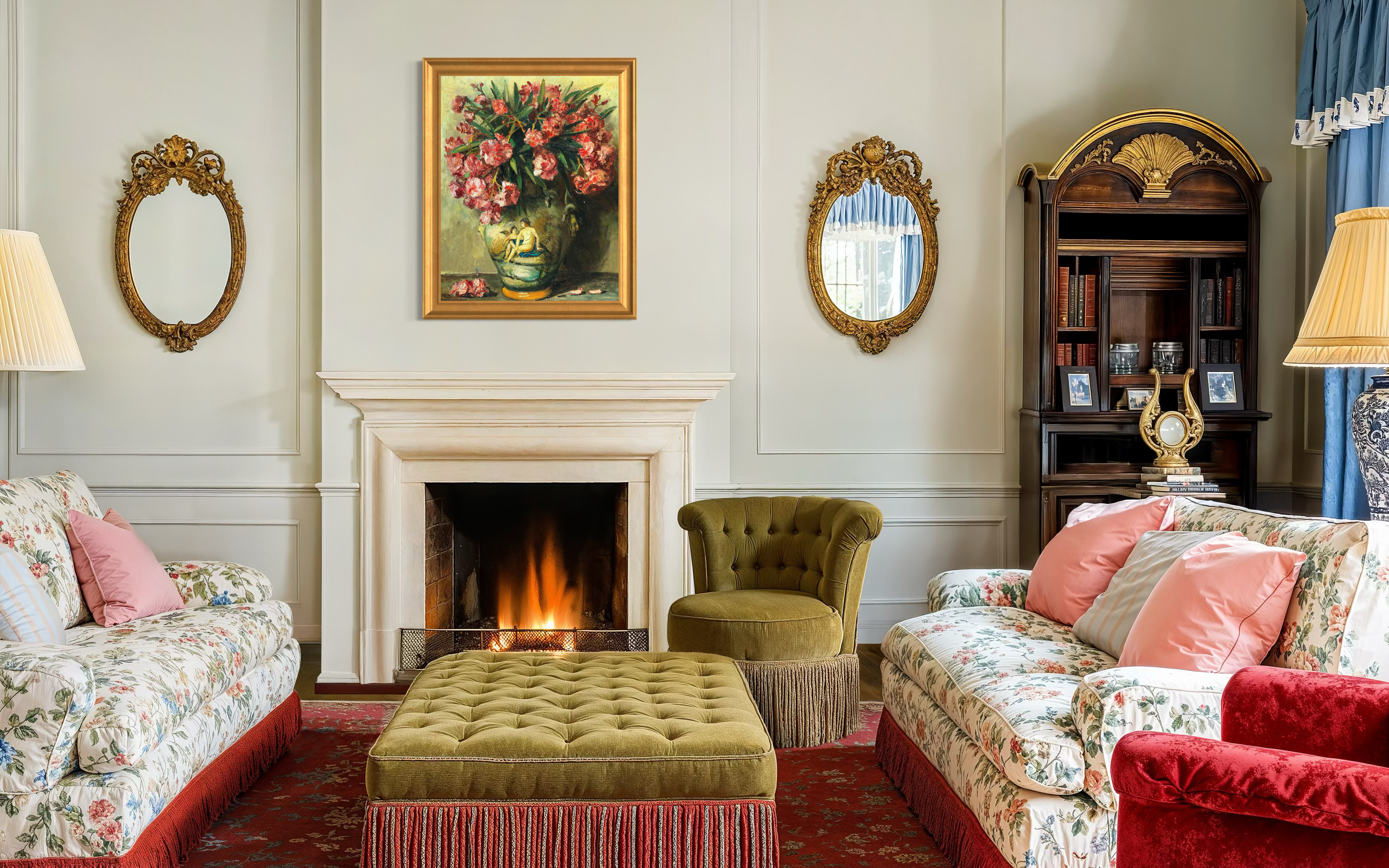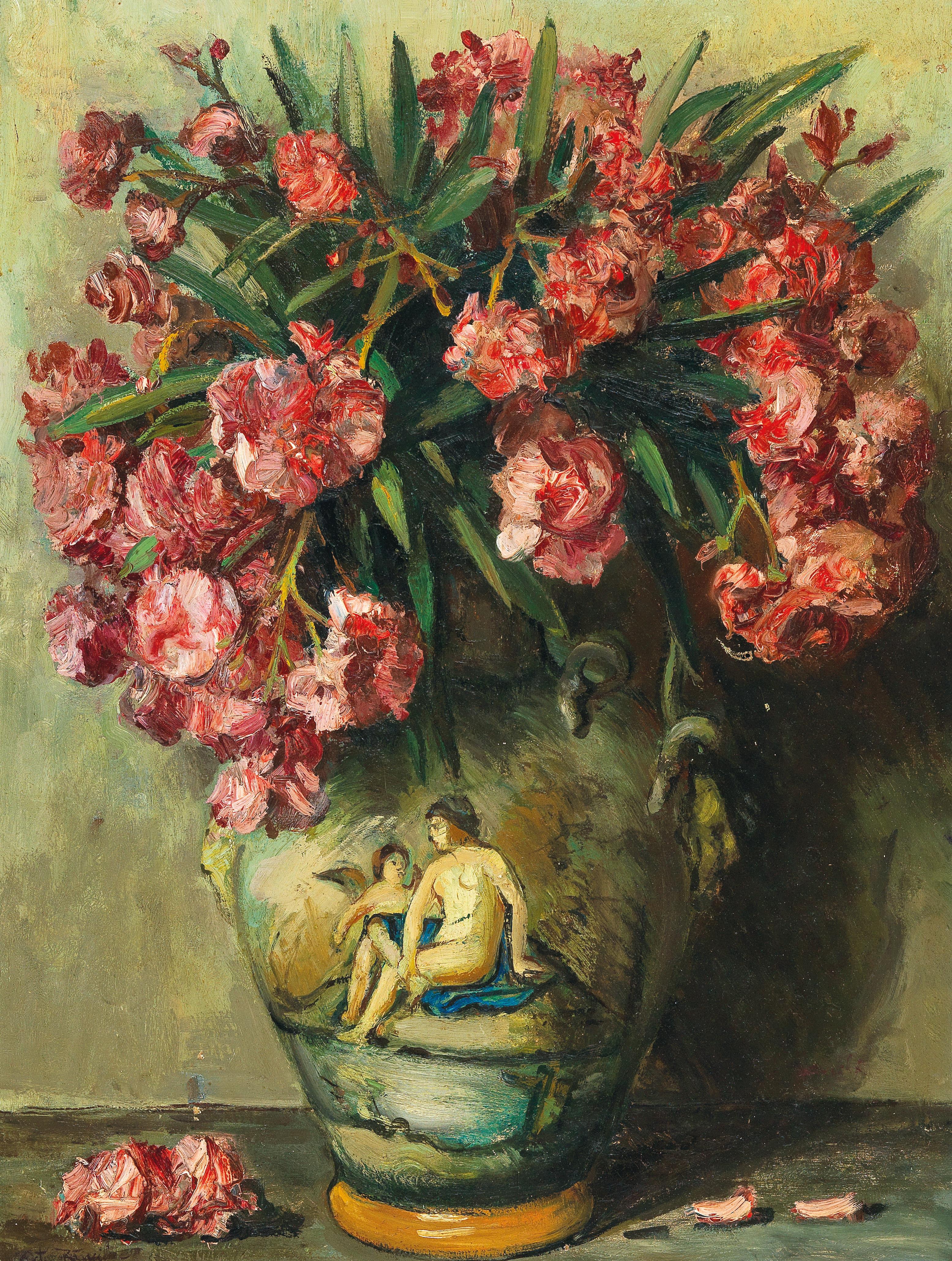
Octav Băncilă - Vase painted with carnations
Sale price32.000,00 lei


Cart
Your cart is empty
Octav Băncilă (1872–1944) is one of the essential figures of Romanian painting from the beginning of the 20th century, recognized for his expressive power, depth of observation, and commitment to social reality. Trained at the School of Fine Arts in Iași, in the effervescent atmosphere of the artistic circle around Nicolae Grigorescu and Gheorghe Panaiteanu-Bardasare, Băncilă combined technical talent with a profoundly humanist vision.
Throughout his career, the artist tackled a variety of themes, from portraits and landscapes to social and religious compositions, but excelled in the sincere depiction of the human condition. However, beyond his reputation as a realist painter concerned with the suffering and dignity of ordinary people, Băncilă also created a series of remarkably delicate works – still lifes with flowers.
These paintings reveal another side of the artist: contemplative, refined, and poetic. The flowers – carnations, roses, chrysanthemums – are captured with meticulous attention to detail, in a warm light that gives the compositions an atmosphere of tranquility and balance. Through these still lifes, Băncilă explores the fragile beauty of life, transforming everyday simplicity into an expression of sensitivity and harmony.
Octav Băncilă remains a complete artist, capable of capturing both social drama and the delicacy of the intimate world, leaving behind a body of work of remarkable depth and diversity.
Sort by
1 product