Emil Volkers
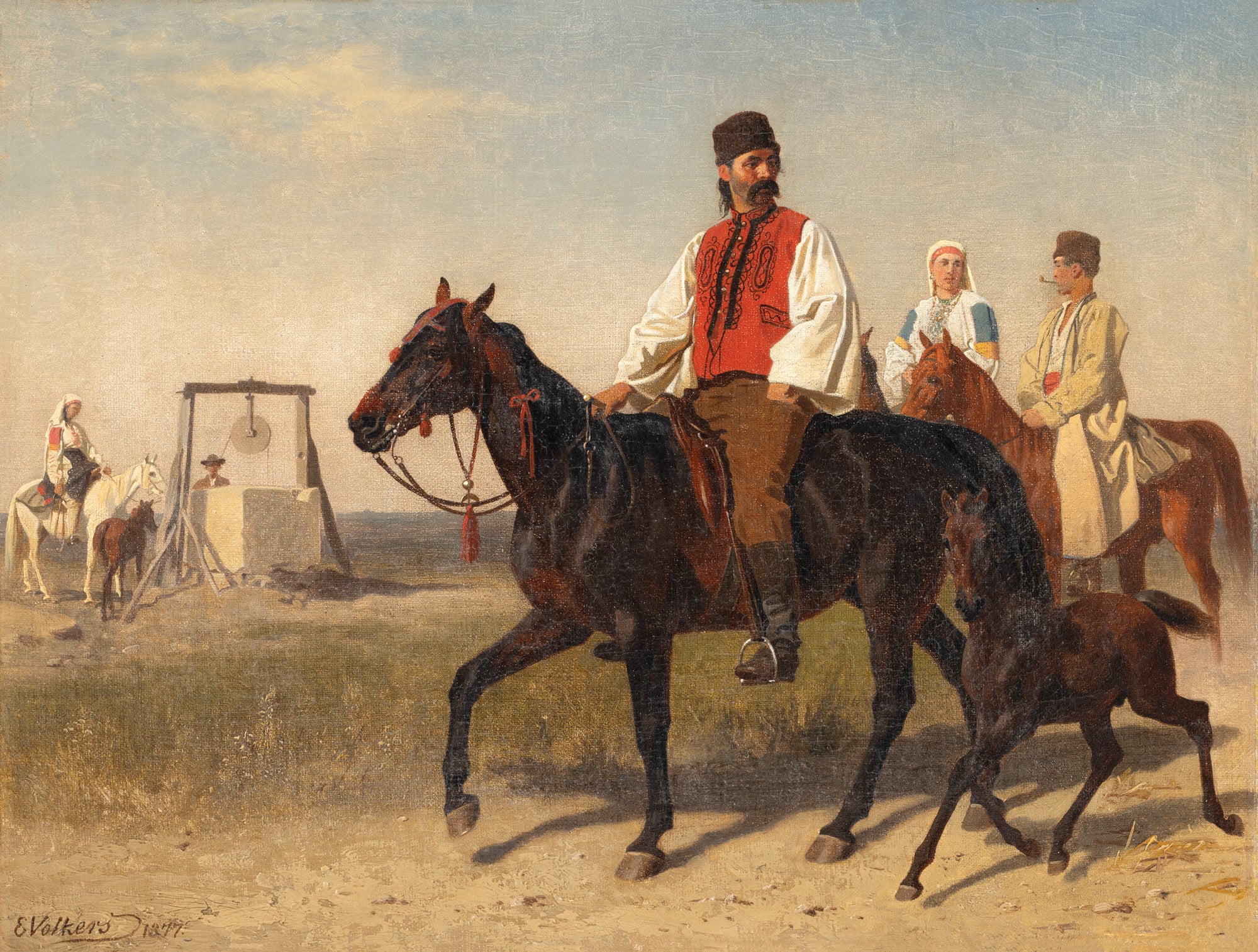
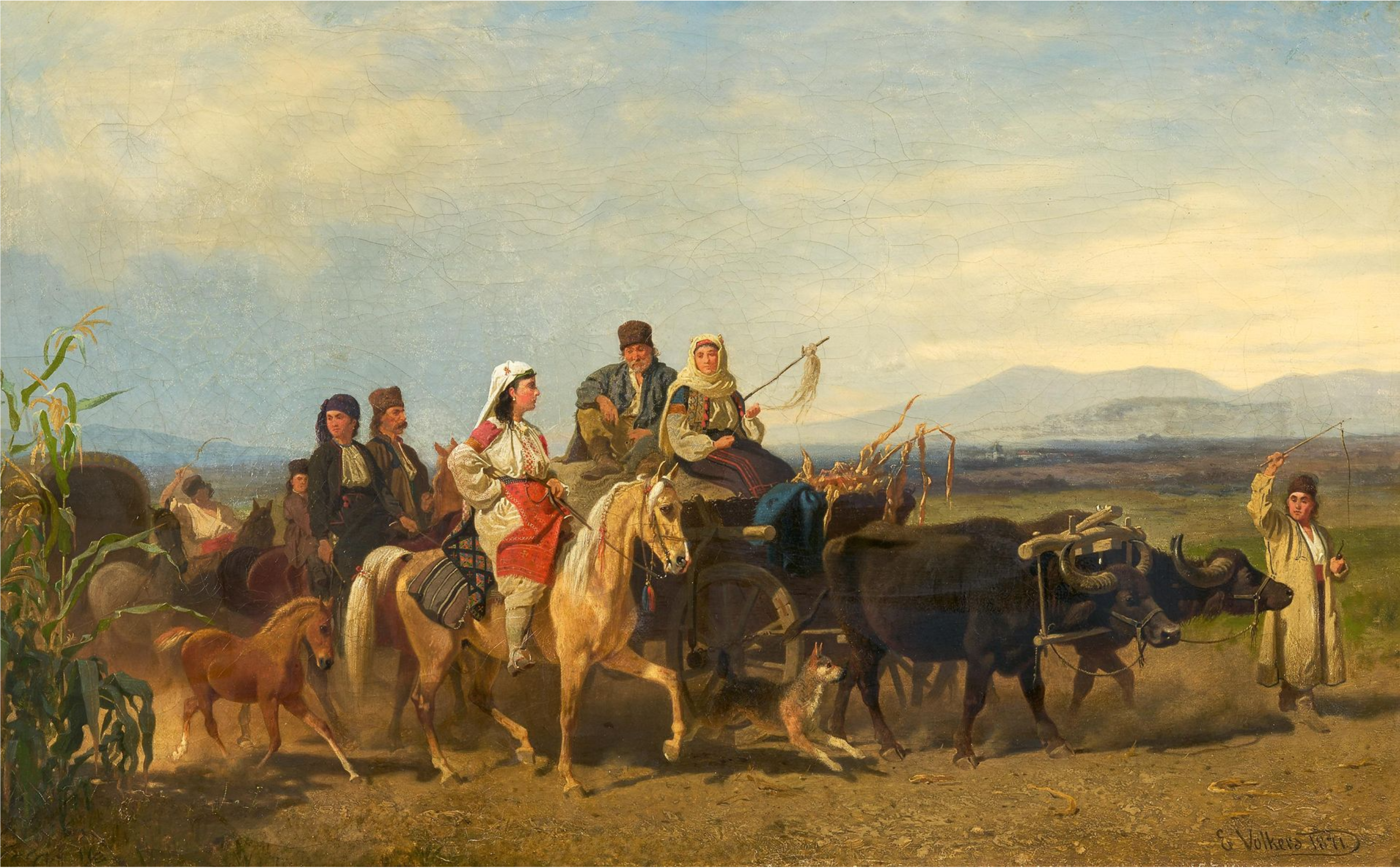
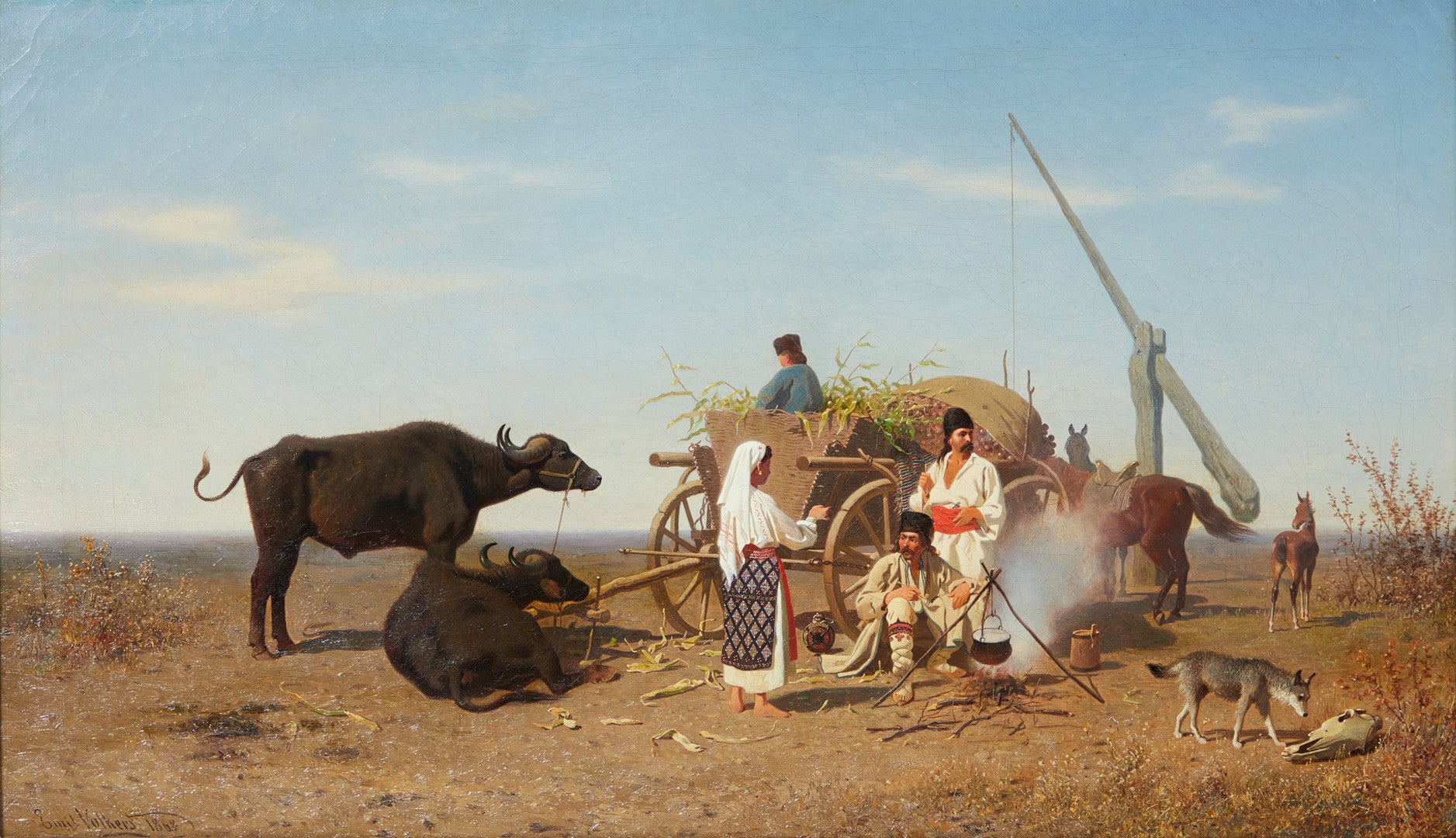
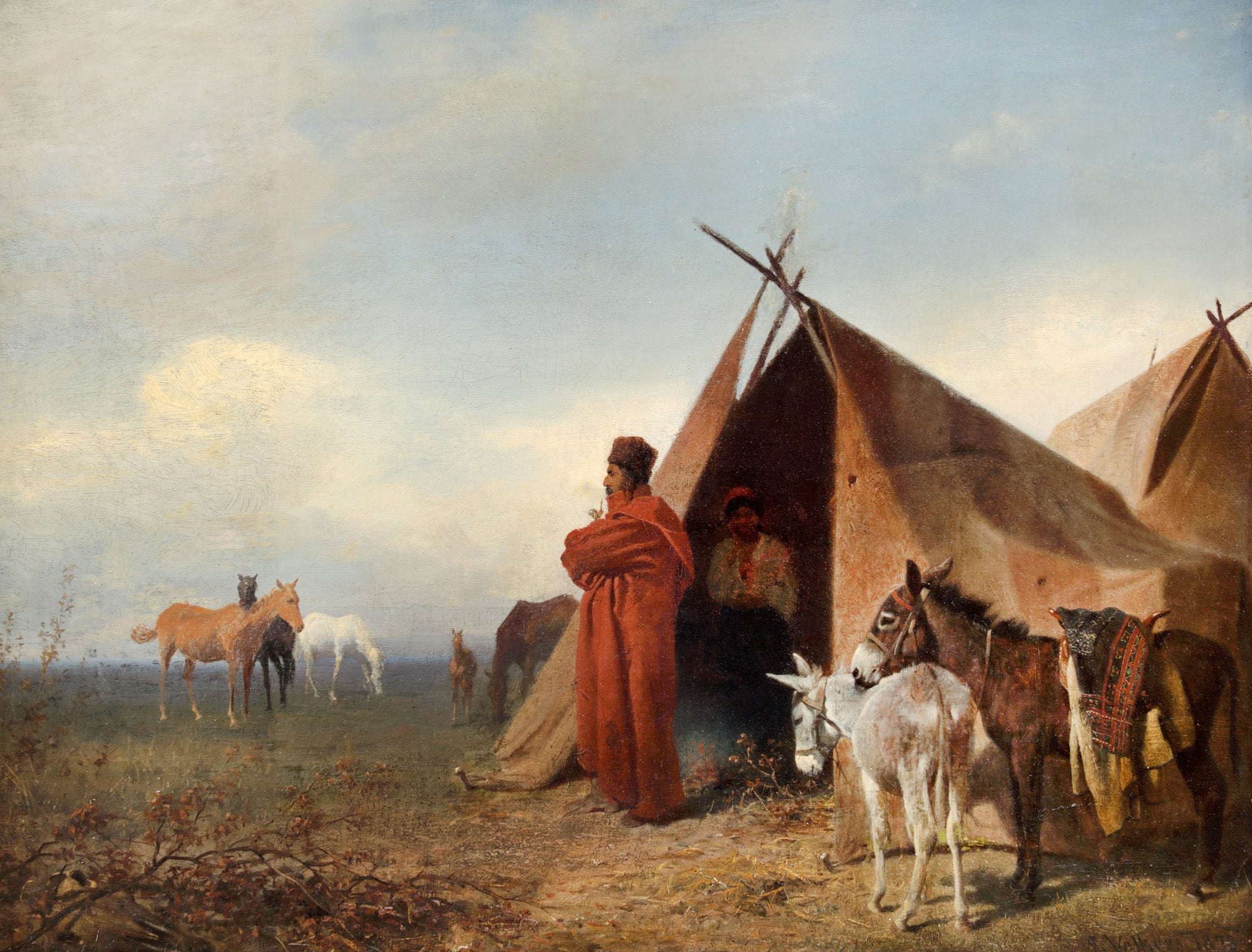
A German painter and lithographer (1831-1905), representative of the Munich and Düsseldorf schools, specialized in military scenes, with horses, and genre scenes, active in the circle of artists who worked for Prince Carol I. He began his studies at the Dresden Academy of Art, then in Munich, with two specialists in battle and horse scenes, Albrecht Adam the father and his son, Franz Adam. A keen observer and professional, an excellent connoisseur of equine anatomy, Volkers became famous after the publication of a highly appreciated album about equines in 1859. Passionate about art and military representations, eager to make known the beauties of his new homeland, the young ruler Carol I invited Volkers to Bucharest in 1867, appointing him court painter (Hofmaler). As he organized his army, Prince Carol I also needed its representation, and his own portrayal as the supreme authority. As chromolithography was an ideal means of multiplication and had returned to the attention of illustrators, he commissioned Volkers a series of large-sized color images, printed in Düsseldorf, depicting military maneuver scenes. The painter's works, part of the princely collection, were exhibited in 1873 at the Exhibition of the Society of Friends of Fine Arts (The White Horse and A Fair in Argeș). During the 1877 war, Volkers accompanied the Romanian army in the Bulgarian campaign. Until the end of the century, he traveled to our country on numerous occasions, attracted by the picturesque landscape or traditional folk attire, which gradually replaced military compositions, with horses and draft animals remaining ineluctable presences. The accuracy with which he noted ethnographic detail now gives his works a precious documentary character, in which the taste for narrative is highlighted by his smooth and rigorous style.