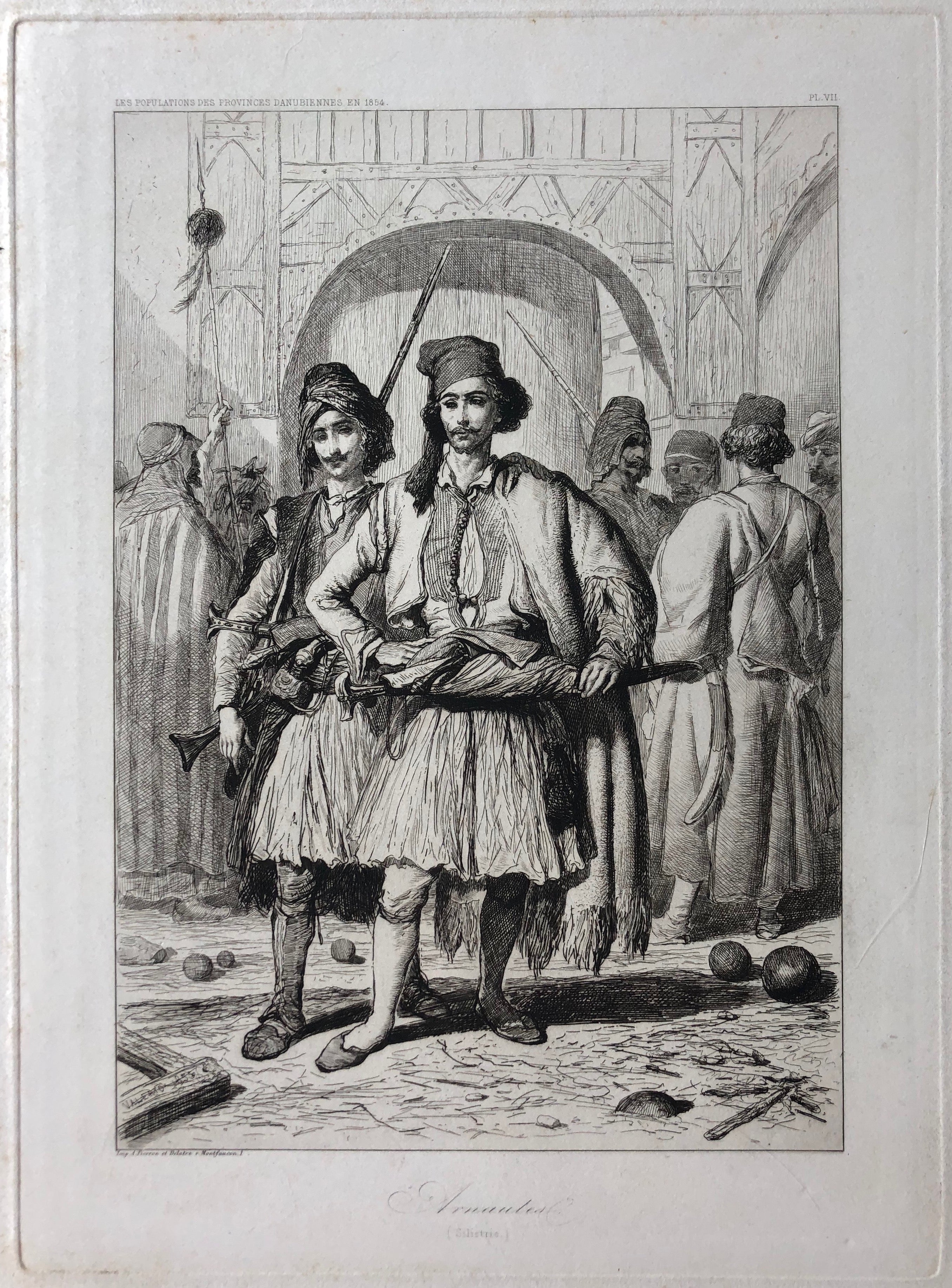
Theodore Valerio - Arnauti from Silistra
Sale price500,00 lei
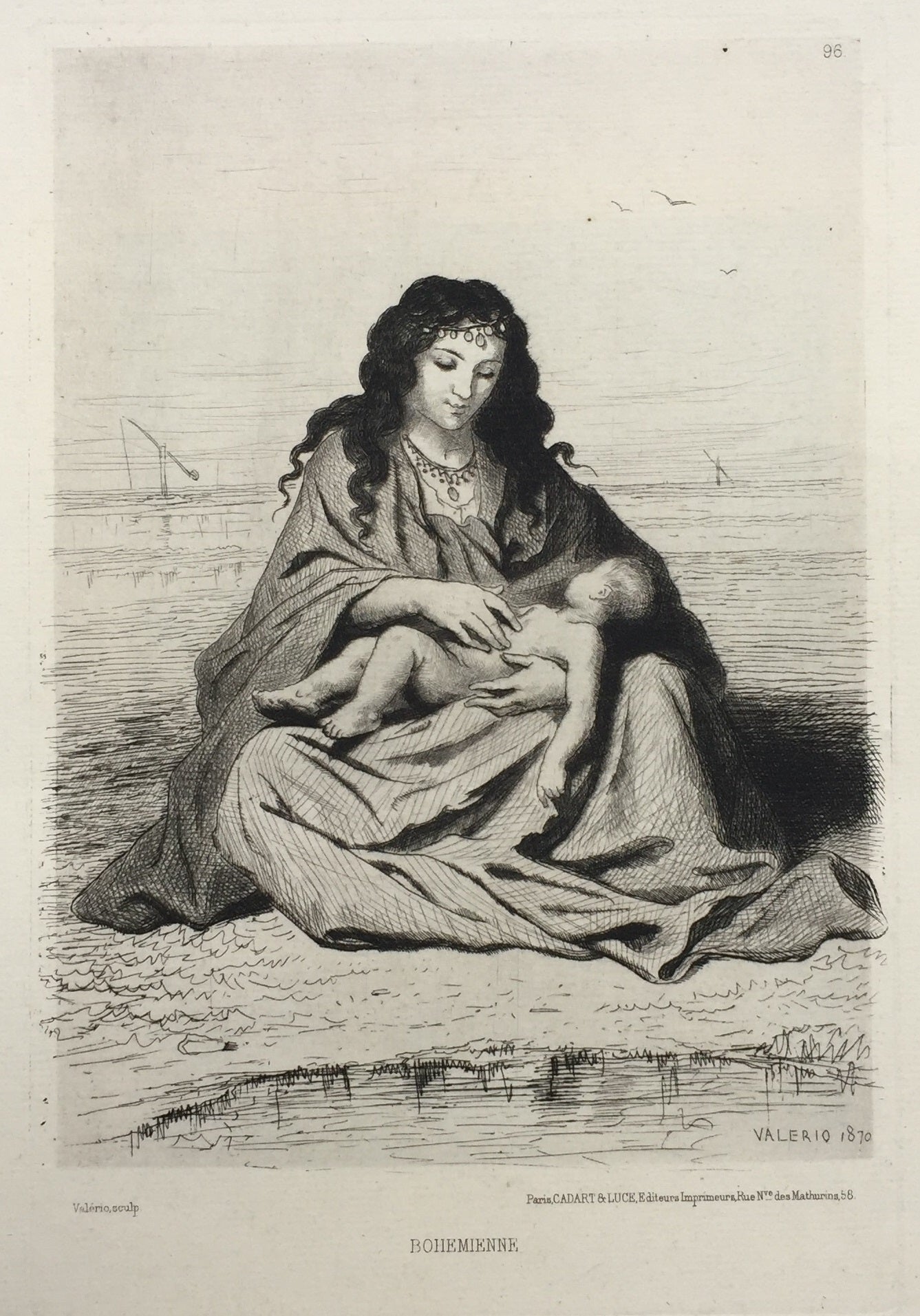
Theodore Valerio - Bohemienne
Sale price1.250,00 lei


Cart
Your cart is empty
Théodore Valerio (1819, Herserange – 1879, Vichy) was a French painter and engraver, trained in the workshop of Nicolas-Toussaint Charlet, known for his refined documentary art—a blend of ethnographic insight and romantic poetry. Valerio traveled extensively in Central and Southeastern Europe (the Romanian Principalities, Transylvania, Dalmatia, Hungary, Tyrol), noting down faces, costumes, customs, and fragments of daily life in notebooks and on engraving plates.
His work is distinguished by precise drawing, virtuosity in graphic techniques (lithography, etching, aquatint), and a careful empathy for the subject. He created albums of plates dedicated to regional "scenes and costumes," in which peasants, shepherds, women in traditional dress, fiddlers, or Roma communities are captured with naturalness and dignity. These images, far from facile exoticism, are constructed with rigor and finesse, becoming at the same time primary visual documents for the cultural history of the 19th century.
In addition to his graphic cycles, Valerio worked in watercolors and oils with the same sensitivity for light, texture, and atmosphere, but his true celebrity lies in engraving: paper becomes a "stage" for small gestures and restrained glances, and the clear line organizes the story without rhetoric.
Looking today at Théodore Valerio's plates, we discover a sophisticatedly mapped human geography—an atlas of 19th-century rural Europe, rendered with respect, accuracy, and narrative charm. Through this synthesis between art and observation, Valerio remains a benchmark of European graphic reportage and an essential witness to the traditional world of the Danubian-Balkan region.
Sort by
2 products