
Michael Töpler
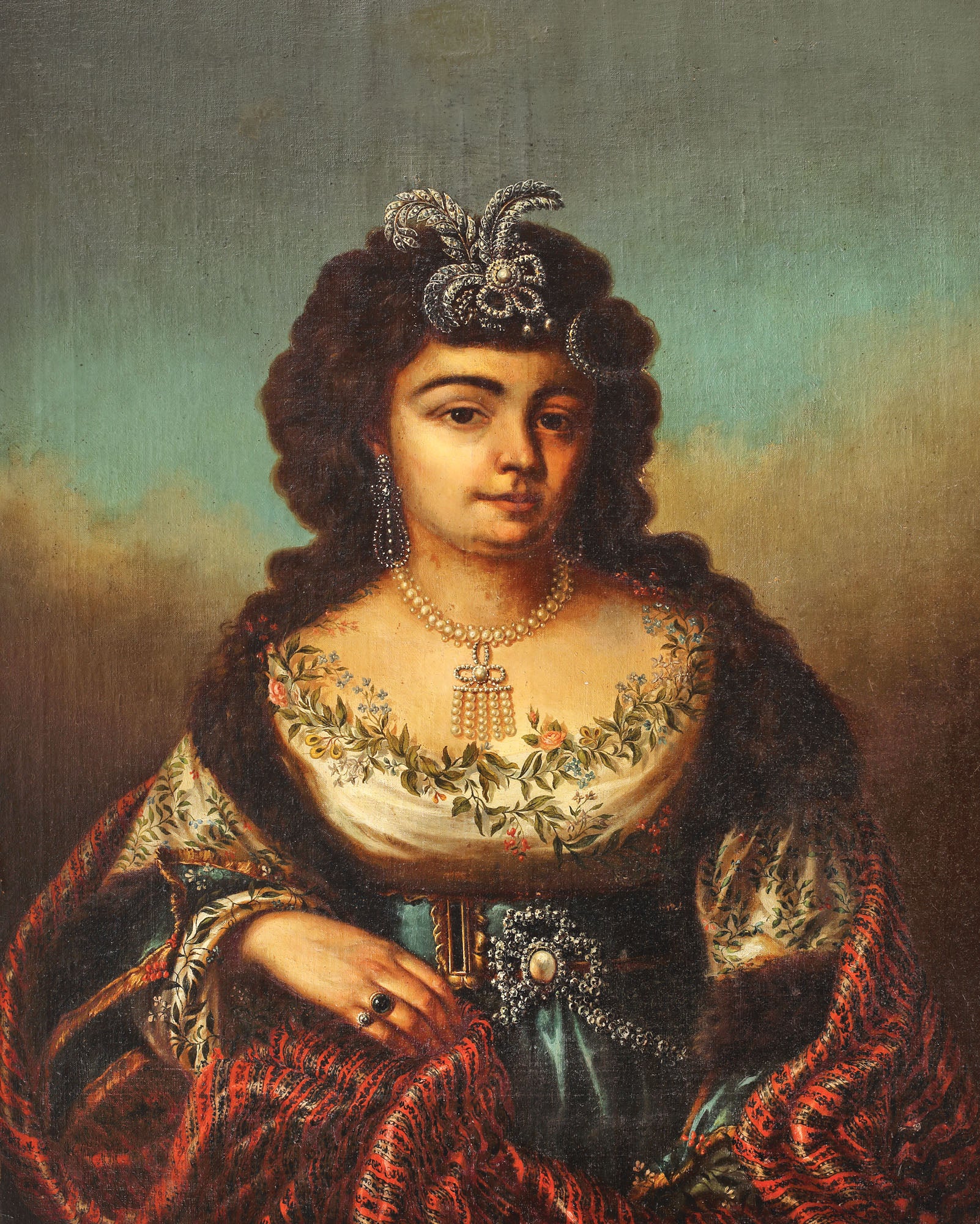
Mihail Töpler (c. 1780 – c. 1820) was a portrait painter trained in Vienna, active in the first decades of the 19th century in Wallachia and Moldova, where he became one of the most sought-after painters among the elites of the time. His academic education is reflected in the rigor of his drawing, the careful modeling of faces and hands, the meticulous rendering of fabrics and jewelry, as well as his preference for austere backdrops — drapes, columns, architectural elements — which lend dignity and balance to his compositions.
Stylistically, Töpler belongs to the Neoclassical register with Viennese influences: a tempered palette, even lighting, ordered compositions, and a ceremonial presence that highlights the social status of the figures. Beyond the protocol, his portraits possess a restrained psychology: calm gazes, discreet gestures, and an unostentatious nobility that individualizes the sitter and maintains their authority.
His list of patrons includes illustrious names of the era — Smaranda Manu, Mihail Manu, Maria Cantacuzino, Maria Dudescu, as well as the Great Logofetesa Smaranda Sturdza-Balș — attesting to the artist's movement between the boyar centers of Bucharest and Iași. Through his work, Töpler established in the Principalities a canon of official portraiture adapted to early modernity, replacing the late Baroque-Rococo refinement with Neoclassical clarity and sobriety.
Today, Mihail Töpler's works, preserved in museums and collections, remain essential visual documents for the social history and artistic taste of the early 19th century, confirming the profile of a cultivated portrait painter of classical elegance and consistent mastery.
Sort by
1 product