
Grand Logofeteasă Smaranda Sturdza-Balș, a Rediscovered Portrait
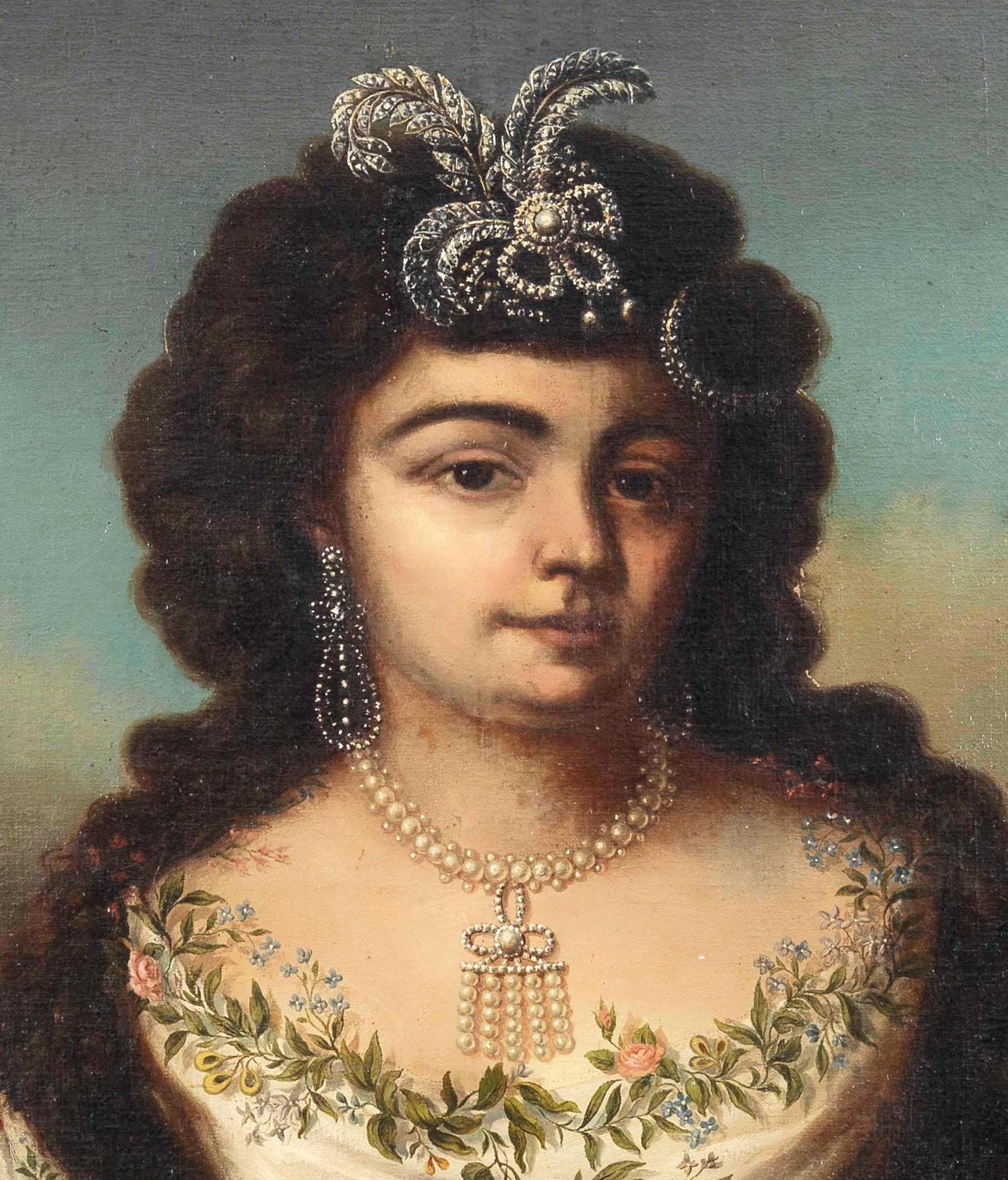
In an era where the names of ancient boyars seem increasingly distant, their faces faded under the dust of time and oblivion, the discovery of a forgotten portrait can become a cultural event in itself. This is the case of Smaranda Sturdza-Balș, the great logothete of Moldavia from the early 19th century, whose image recently reappeared—and for the first time in color—after being lost for over a hundred years.
A portrait believed lost… rediscovered in Vienna, returned to Romania

The surprise came in 2020, when this portrait was discovered at an auction organized by Dorotheum in Vienna – one of Europe's most prestigious institutions in its field. The work was listed under the title "Portrait of a Noble Lady", attributed to the Viennese painter Mihail Töpler, but without knowing the identity of the woman depicted.
Today, the painting is once again in Romania, in the Artiss collection and gallery, where it can be admired under its authentic name:

Who was Smaranda Sturdza-Balș?

She spent her childhood and youth in Iași, in her parents' house located in the Copou area, where the Military Hospital stands today.
In 1798, Smaranda married Alexandru (Alecu) Balș, the son of the great Vornic Iordache Balș. Her husband would later become the Great Treasurer of Moldavia.


But Smaranda was not just an official's wife and a boyar's mother. She was a cultured woman, mistress of a valuable library with volumes in French, Romanian, and Greek, whose inventory has been preserved. Through her education and tastes, Smaranda reflects the profile of a Europeanized female elite of the late Phanariote era.
The wealth and legacy of a logothete
The estates owned by Smaranda in Bessarabia – Crasnaleuca, Corbu, and Andrieșeni in Hotin County – as well as those in Moldavia – Zberoaia, Zăzuleni, and Costinelu – reveal a woman of great wealth and influence. What makes her remarkable, however, is her will: she left a portion of her estates and jewelry to found an institute for poor girls, who were to receive a small dowry upon marriage.

A possible future Princess of Moldavia
It was said about Smaranda that she could have become the Princess of Moldavia, had political fate been different. Perhaps she did not ascend to the country's throne, but she was a prominent figure in the aristocratic circles of her era. Her complex personality deserves to be brought back into focus, not only through a rediscovered portrait but also through a deeper exploration of her biography.
Moreover, a recent study, Testamentul și inventarul averii vistiernicesei Smaranda Balș (1833 / 1848) (The Will and Inventory of the Assets of Treasurer Smaranda Balș), available on academia.edu, offers a detailed analysis of documents regarding her inheritance and life. From there, we also learn that her actual death date is September 17, 1848, not 1845, as incorrectly stated in some reference works.
The rediscovery of the portrait – a window to the past
Returning to the portrait signed by Mihail Töpler, a Viennese painter active in Moldavia in the first half of the 19th century, it must be said that the work is more than just a beautiful image: it is a window to a forgotten era, to values, fashion, jewelry, but especially to an identity. Matei Eminescu, the poet's brother, mentioned Töpler as an artist who painted the entire Balș family in Dumbrăveni, also creating "the seven wonders of the world" in landscapes.
In conclusion
- The Will and Inventory of the Assets of Treasurer Smaranda Balș (1833 / 1848) – Academia.edu
- Alexandre A.C. Sturdza – Règne de Michel Sturdza, Paris, 1907
- Mihai Dim. Sturdza – Encyclopedia of Romanian Boyar Families, vol. I

Written by Artiss Gallery